Beneath the cobblestone streets and Gothic facades of modern Poland and the Czech Republic lies a hidden world frozen in time—a labyrinth of medieval underground passages that whisper tales of trade, turmoil, and daily life from centuries past. These subterranean networks, often overlooked by travelers rushing between cathedrals and castles, offer a raw, immersive journey into the heart of Central European history. Unlike the polished museums and restored fortresses above ground, the underground cities retain an eerie, untouched authenticity, where the chill in the air seems to carry echoes of long-forgotten voices.
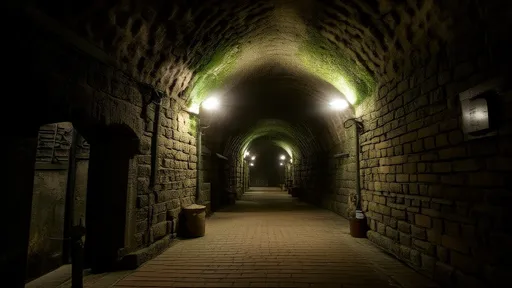
In Poland, the city of Wrocław boasts one of the most extensive and enigmatic underground systems, known as Piwnica Świdnicka. Originally constructed in the 13th century as a storage cellar for beer and goods, it evolved into a bustling hub of social and economic activity. What began as practical infrastructure soon became a refuge during times of war and political unrest, with tunnels expanding secretly over generations. Today, visitors can descend into its shadowy corridors, where rough-hewn stone walls and low arches evoke the resilience of medieval merchants who navigated both commerce and conflict. Artifacts like ancient pottery, coins, and tools occasionally emerge during excavations, hinting at the vibrant life that once thrived below street level.
Not far away, beneath the picturesque streets of Kraków’s Old Town, lies another subterranean marvel: the Rynek Underground museum. This site, uncovered accidentally during renovations in the 2000s, reveals layers of history dating back to the 12th century. Here, visitors walk on glass floors above excavated market stalls, graves, and even remnants of a medieval mint. The atmosphere is thick with mystery, as interactive displays and dim lighting highlight how these spaces served as everything from trade routes to hideouts during Mongol invasions. It’s a stark reminder that Kraków’s above-ground beauty is built upon centuries of hidden struggles and ingenuity.
Crossing into the Czech Republic, the underground world takes on a different character, shaped by the region’s mining heritage and strategic conflicts. In Prague, the labyrinth beneath the Old Town Hall is particularly legendary. These tunnels, initially built for storage and defense, later became associated with alchemists and mystics during the reign of Rudolf II. Whispers of secret experiments and occult gatherings still linger in the damp air, adding a layer of myth to the historical narrative. Meanwhile, in the town of Kutná Hora, the medieval silver mines plunge visitors into a claustrophobic yet fascinating realm. Miners once toiled here in perilous conditions, extracting wealth that funded the kingdom’s growth. Today, guided tours wind through narrow shafts, showcasing tools and techniques that defined an era of industrial daring.
Further south, the underground passages of Znojmo in Moravia reveal a multifaceted history of survival. Originally dug as cellars for wine storage—a tradition that continues today—they were expanded into a connected network during the Hussite Wars of the 15th century. These tunnels served as covert communication routes and shelters, with hidden exits and chambers that could sustain inhabitants for weeks. Exploring them feels like stepping into a strategic masterpiece, where every twist and turn was designed for protection against sieges and invasions. The cool, earthy scent of the tunnels, combined with occasional displays of historical weaponry and storage jars, transports visitors directly into the mindset of medieval defenders.
What unites these underground sites across both countries is their role as silent witnesses to history’s upheavals. From the Black Death to religious wars, these spaces provided sanctuary and continuity. In Poland, many tunnels were reinforced during World War II, serving as bomb shelters and resistance hideouts. In the Czech lands, they evolved from practical storage to symbols of resilience against foreign domination. This adaptive reuse underscores a broader theme: that beneath the surface, history is not linear but cumulative, with each generation leaving its mark on the same foundational spaces.
Despite their historical significance, these underground cities face preservation challenges. Humidity, structural decay, and urban development threaten their stability. Organizations in both countries are now employing advanced technology like 3D scanning and climate control to protect these fragile environments. Efforts are also underway to balance tourism with conservation, ensuring that visitors can experience the past without eroding it. This delicate dance between access and preservation is crucial, as these sites offer irreplaceable insights into medieval life beyond what books and ruins can convey.
For travelers seeking an alternative to crowded surface attractions, the underground cities of Poland and the Czech Republic provide a profound connection to the past. They are not mere tourist stops but immersive time capsules, where the echoes of footsteps, the chill of stone, and the shadows dancing on walls evoke a visceral sense of history. To walk these passages is to understand the resilience and ingenuity that shaped Central Europe—a journey into the depths where the medieval world still breathes, waiting to be discovered by those willing to look beneath the surface.
By /Sep 1, 2025

By /Sep 1, 2025

By /Sep 1, 2025
By /Sep 1, 2025

By /Sep 1, 2025

By /Sep 1, 2025
By /Sep 1, 2025

By /Sep 1, 2025

By /Sep 1, 2025
By /Sep 1, 2025
By /Sep 1, 2025

By /Sep 1, 2025

By /Sep 1, 2025

By /Sep 1, 2025
By /Sep 1, 2025
By /Sep 1, 2025

By /Sep 1, 2025

By /Sep 1, 2025
By /Sep 1, 2025

By /Sep 1, 2025