In the realm of culinary physics, few tools are as fascinating and transformative as the pressure cooker. Its ability to tenderize even the toughest cuts of meat in a fraction of the time required by conventional methods is nothing short of alchemy. This remarkable feat is not magic, but a brilliant application of fundamental physics and biochemistry, primarily targeting the breakdown of stubborn connective tissues. Understanding this process requires a journey into the molecular structure of meat and the powerful influence of high-pressure environments.
Connective tissue is the biological architecture that holds muscle fibers together, providing structure and support to an animal's body. It is composed primarily of two proteins: collagen and elastin. Elastin, as the name suggests, is elastic and does not break down significantly with heat. Collagen, however, is the key. It is a tough, fibrous protein that forms a rigid triple-helix structure, making cuts like brisket, chuck roast, and shank notoriously challenging to cook. In traditional braising or stewing, the gentle, prolonged application of moist heat, over many hours, is required to slowly unravel these tight coils of collagen and convert them into unctuous, silky gelatin. This is a process of hydrolysis, where water molecules slowly work their way into the protein bonds, breaking them apart.
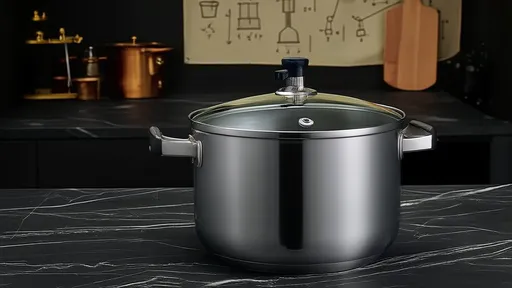
The pressure cooker fundamentally accelerates this hydrolysis reaction by manipulating two critical physical parameters: temperature and pressure. According to the ideal gas law, PV = nRT, increasing the pressure inside a sealed vessel directly correlates with an increase in temperature. While a pot of water on a stovetop boils at 100°C (212°F) at sea level, the sealed environment of a pressure cooker traps escaping steam, raising the internal pressure. For every pound per square inch (psi) of pressure increase, the boiling point of water rises by approximately 3°C (5.4°F). Most modern cookers operate at around 12-15 psi, which elevates the boiling point to about 120-125°C (248-257°F).
This elevated temperature is the primary engine of destruction for collagen. Heat provides the kinetic energy that vibrates the long, coiled collagen molecules. At a standard boiling temperature of 100°C, this vibration is significant but slow. At 121°C, the molecules are agitated far more violently, dramatically increasing the rate at which the hydrogen bonds holding the triple helix together are shaken apart. It is a physical onslaught that drastically speeds up the chemical process. What once took six to eight hours in a Dutch oven can now be achieved in under ninety minutes. The difference is not merely incremental; it is exponential.
However, temperature is only part of the story. The high-pressure environment itself plays a crucial and often underappreciated role. The immense pressure, typically over twice the atmospheric pressure, physically forces water and steam into the meat's microstructure. This action is mechanical as much as it is thermal. Imagine trying to slowly soak a dense sponge versus forcibly injecting it with water; the pressure cooker does the latter. This forced penetration ensures that the water necessary for hydrolysis is delivered deep into the core of the connective tissues much more efficiently than in an open pot, where evaporation and simple diffusion are the only drivers.
The combination of high heat and forced hydration creates a perfect storm for collagen. The triple helix structure begins to denature, unwinding into individual polypeptide chains. As these chains are exposed to the hot, pressurized water, the hydrolysis reaction proceeds at a furious pace. The peptide bonds linking amino acids are cleaved by water molecules, fracturing the long protein chains into smaller segments. This is the transformation from tough, insoluble collagen into tender, water-soluble gelatin. This gelatin then permeates the muscle fibers, lubricating them and creating that fall-apart tenderness and rich, viscous mouthfeel that is the hallmark of a perfectly braised dish.
The implications of this process extend far beyond the kitchen. The same principles are employed in industrial sterilization processes, such as autoclaving medical equipment, where high pressure and temperature ensure the complete destruction of resilient biological pathogens. In the field of biochemistry, pressure cycling technology (PCT) uses rapid hydrostatic pressure changes to break open cells and extract proteins and DNA for analysis, a direct parallel to how the cooker breaks down tissue structure. Even the paper pulp industry utilizes digesters that function like giant pressure cookers to break down the lignin in wood, separating the cellulose fibers.
Back in the domestic sphere, the mastery of the pressure cooker is a lesson in energy efficiency. By dramatically reducing cooking times, it conserves a significant amount of energy compared to keeping an oven or stovetop active for hours on end. It also excels at preserving nutrients that are typically leached out into cooking water and lost to steam over long periods, as the sealed environment minimizes evaporation and oxidation. The flavors, too, become more concentrated and intense, as volatile aromatic compounds are trapped inside the pot and re-absorbed by the food, rather than escaping into the kitchen air.
Ultimately, the pressure cooker is a triumph of applied science. It is a device that harnesses the simple, brute force of physics—the laws governing gases and heat transfer—to perform a complex biochemical transformation. It takes one of cooking's most time-intensive processes and reengineers it for the modern world, all by understanding and exploiting the vulnerability of collagen under pressure. It is a tool that doesn't just cook food faster; it fundamentally changes the very nature of the cooking process itself, delivering results that are not only quick but often superior in texture and flavor. It is a quiet testament to the fact that sometimes, the most profound culinary innovations are born not from new ingredients, but from a deeper understanding of the physics happening in the pot.

By /Aug 29, 2025
By /Aug 29, 2025
By /Aug 29, 2025
By /Aug 29, 2025

By /Aug 29, 2025
By /Aug 29, 2025
By /Aug 29, 2025
By /Aug 29, 2025

By /Aug 29, 2025
By /Aug 29, 2025
By /Aug 29, 2025
By /Aug 29, 2025

By /Aug 29, 2025
By /Aug 29, 2025

By /Aug 29, 2025

By /Aug 29, 2025

By /Aug 29, 2025

By /Aug 29, 2025

By /Aug 29, 2025
By /Aug 29, 2025